Commercial roofing
Commercial roof systems that protect the operation below
Installation, repair, maintenance, inspection, and storm restoration for flat, low-slope, and metal commercial roofs.
Direct answer
Commercial roofing scope begins with drainage, details, and operations.
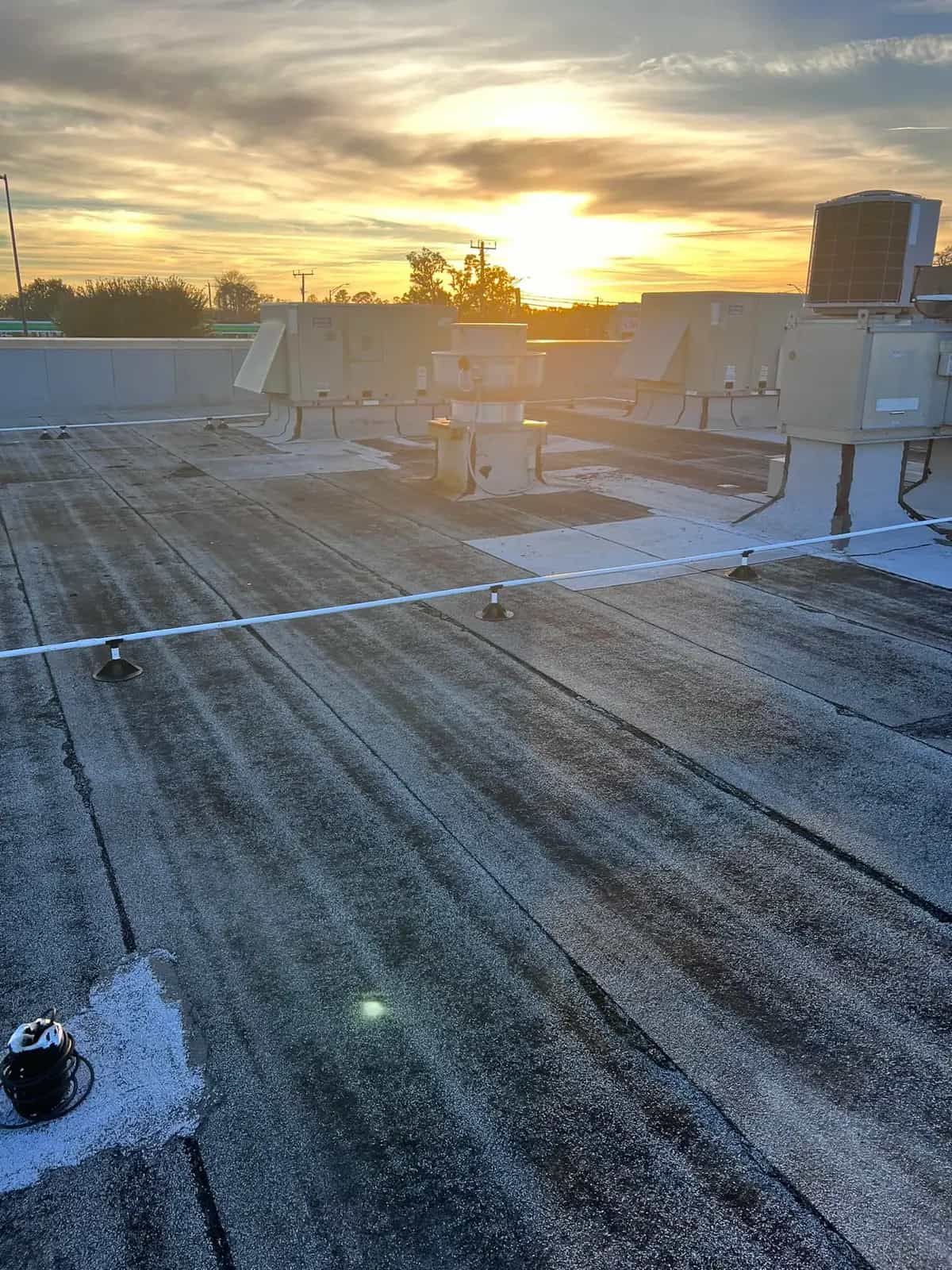
Powell & Sons evaluates suitable North Florida commercial roofs by system type, slope, drainage, penetrations, rooftop equipment, transitions, access, occupied-space protection, staging, and operating constraints. The findings guide a repair, maintenance, or replacement discussion without promising a remote diagnosis or zero disruption.
The Powell approach
Clear communication from assessment through completion
A commercial roof has to protect people, equipment, inventory, and day-to-day operations. We plan the roofing work around the building, the selected system, drainage, access, and a practical project timeline.
Powell & Sons serves businesses across North Florida with direct owner involvement and straightforward updates. Our work includes new installation, replacement, leak repair, preventative maintenance, inspection, and storm-damage restoration.
Family roots · 1982Why this system
Performance lives in the details
Material choice matters. The installation below, beside, and through that material matters just as much.
Operational planning
Project sequencing is shaped around safe access and business continuity.
System-specific work
Materials and details are matched to slope, drainage, exposure, and facility needs.
Direct communication
Owners stay close to scope, progress, and field decisions without sales-layer handoffs.
Roofing options
Systems selected for the building
Single-ply systems
TPO and EPDM options for many flat and low-slope commercial applications.
Modified bitumen
A reinforced asphalt-based system for suitable low-slope assemblies.
Commercial metal
Durable panel systems for sloped commercial and light-industrial roofs.
Repair and maintenance
Targeted repairs, inspection, and preventative work for existing systems.
Installation process
A disciplined path from roof deck to final review
Every property is different. These are the core steps that keep the work clear and the finished system complete.
- 01
Roof assessment
We document current conditions, drainage, details, and visible trouble areas.
- 02
Scope and options
The proposed approach is aligned to the building and business priorities.
- 03
Site planning
Access, material staging, safety, and operational constraints are coordinated.
- 04
System installation
The roof is installed or repaired to the defined assembly and details.
- 05
Closeout review
The completed work, cleanup, and next-step care are reviewed with the owner.
Start with the scope
Compare repair and replacement before choosing the system
Material is only one part of the decision. Use these guides to organize the current concern, repair history, complete assembly, and property needs.
Official Florida resources
Check code and product records at the source.
These first-party links support property-owner research. They do not determine the requirements for a specific parcel, product, or proposed scope. Links reviewed .
Commercial roofing FAQ
Frequently asked questions about commercial roofing
Property-specific answers begin with the building and existing roof. These questions organize the first conversation without diagnosing a roof remotely.
Which commercial roof systems can Powell & Sons assess?
Requests may involve suitable TPO, EPDM, modified-bitumen, commercial metal, and other existing flat or low-slope conditions. The building, existing assembly, drainage, substrate, details, access, and proposed scope determine which options deserve consideration.
How is a commercial roof leak assessment different from a surface patch?
A useful assessment connects the reported interior symptom with accessible membrane or panel conditions, seams, flashings, drains, curbs, penetrations, walls, earlier work, and water paths. The visible symptom may not identify the exterior entry point or concealed condition by itself.
How can roofing work be planned around an occupied business?
Share operating hours, critical entrances, parking, rooftop equipment, interior-sensitive areas, tenant needs, delivery routes, staging limits, and communication contacts. Those constraints help shape access and sequencing, but the website does not promise that work will create no disruption.
When should a commercial roof move from maintenance to replacement review?
The decision can change when problems recur across different areas, drainage or transitions are broadly involved, materials have widespread concerns, earlier repairs no longer define a reliable boundary, or concealed assembly conditions require a whole-system evaluation.