
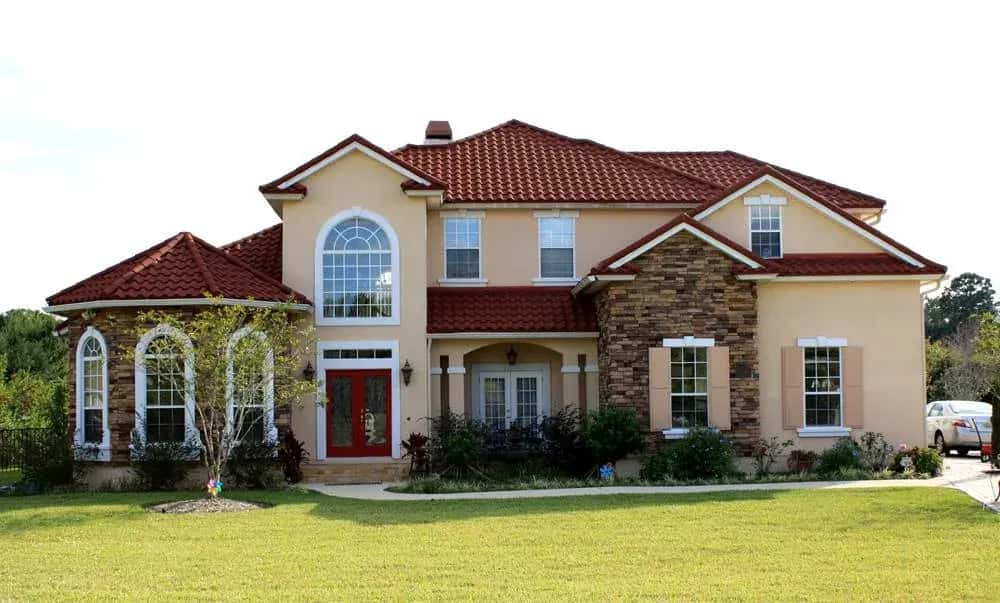
Residential roofing
Tile roofing with strength beneath the surface
Clay and concrete tile systems planned for structural demands, waterproofing, secure placement, and Florida weather.
Direct answer
Tile performance depends on the structure and water-control layers below it.
Powell & Sons plans North Florida tile roofing around structural conditions, deck preparation, underlayment, flashing, attachment, roof geometry, edges, penetrations, and ridge details. Clay or concrete profile selection comes after the building and the complete assembly are understood.
The Powell approach
Designed for long-term value in a demanding climate
Tile gives a home lasting character, but performance depends on far more than the visible finish. Structure, underlayment, fastening, battens, flashing, and ridge details all have to work as one system.
Our tile-roofing process starts with the building itself. We assess roof conditions and material weight, then build the waterproofing and attachment layers needed for a durable result.
Family roots · 1982Why this system
Performance lives in the details
Material choice matters. The installation below, beside, and through that material matters just as much.
Distinctive finish
Clay and concrete profiles bring dimension and enduring architectural character.
Climate durability
Quality tile is well suited to sun, rain, and the daily temperature swings of Florida.
Long-term value
A correctly installed system can deliver lasting performance with appropriate maintenance.
Installation process
A disciplined path from roof deck to final review
Every property is different. These are the core steps that keep the work clear and the finished system complete.
- 01
Structural assessment
We review the roof structure and prepare a sound installation surface.
- 02
Waterproof underlayment
The primary water-control layer is installed with careful transitions.
- 03
Batten system
Where the selected assembly calls for it, battens are measured and secured.
- 04
Tile placement
Tiles are laid out and fastened according to the system and roof conditions.
- 05
Ridge and finish
Ridges, edges, flashing, and final details are completed and reviewed.
Start with the scope
Compare repair and replacement before choosing the system
Material is only one part of the decision. Use these guides to organize the current concern, repair history, complete assembly, and property needs.
Official Florida resources
Check code and product records at the source.
These first-party links support property-owner research. They do not determine the requirements for a specific parcel, product, or proposed scope. Links reviewed .
Tile roofing FAQ
Frequently asked questions about tile roofing
Property-specific answers begin with the building and existing roof. These questions organize the first conversation without diagnosing a roof remotely.
Why is structural review important before choosing roof tile?
Clay and concrete tile assemblies add material weight and interact with the existing deck, framing, slope, and roof geometry. The property must be reviewed before a profile or attachment approach is treated as suitable; structural questions outside roofing scope may require an appropriately qualified professional.
Does tile itself provide all of the roof's water protection?
Tile sheds and channels water, but the underlayment, flashing, edges, valleys, penetrations, attachment, and transitions are critical parts of the water-control assembly. A photograph of the finished tile cannot show whether those concealed layers fit another property.
How do clay and concrete tile options differ?
Profiles, weight, finish, dimensions, attachment details, and compatible accessories vary by product and assembly. The useful comparison begins with the structure, roof geometry, desired appearance, maintenance needs, and the current records for the proposed system.
Can an isolated broken roof tile be repaired?
A contained condition may support a focused repair assessment, but the review also considers surrounding tile, attachment, underlayment clues, flashing, access, and the reason the damage occurred. Broader or recurring conditions can change the appropriate work boundary.