
A focused repair path
A contained defect, compatible surrounding material, and a scope that can be tied to accessible evidence may support a targeted repair discussion.
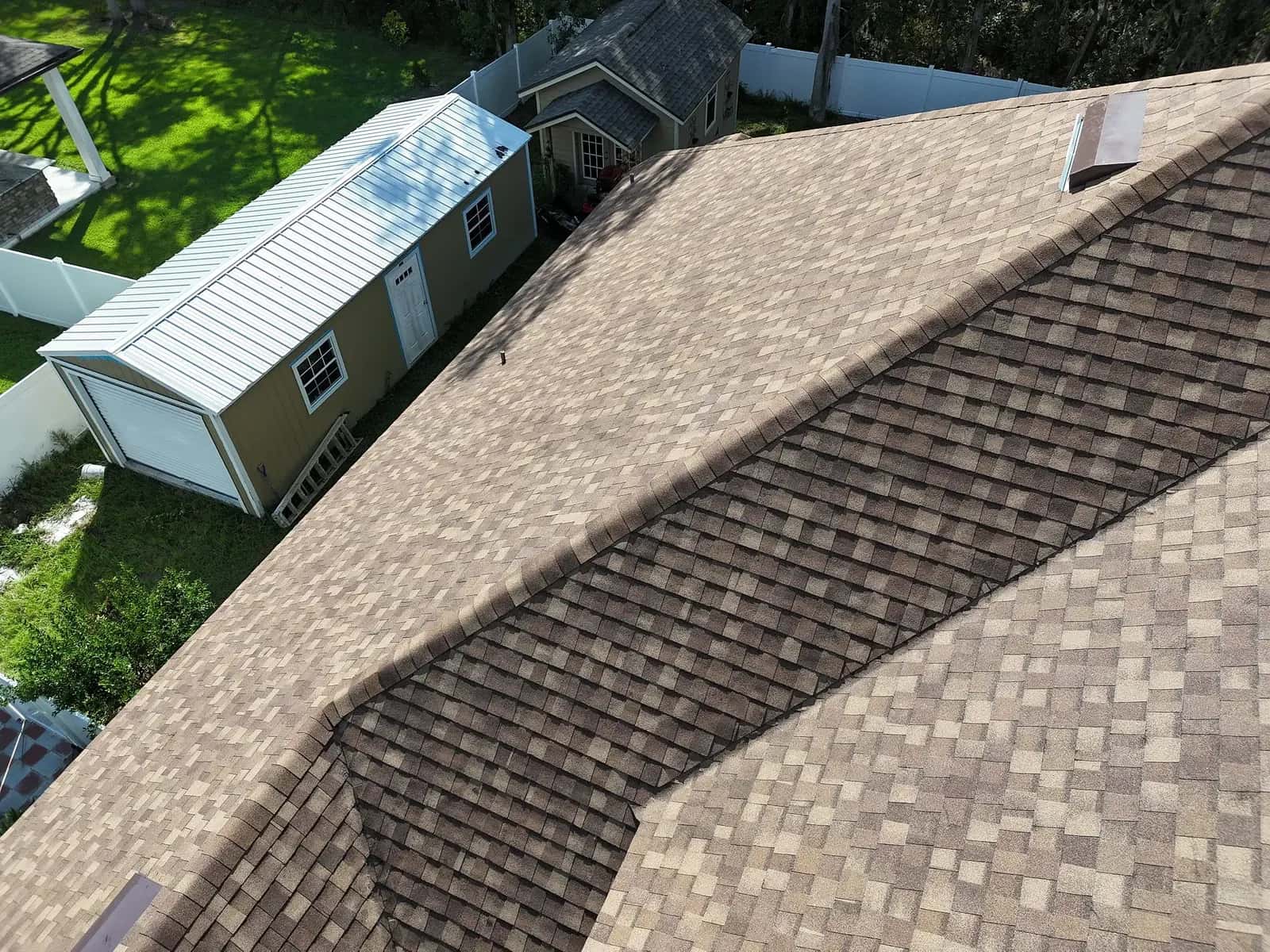
North Florida roof repair
Request a property-specific roof repair assessment in North Florida for leaks, visible damage, flashing, drainage, and recurring roof trouble.
Direct answer
Powell & Sons accepts North Florida requests involving roof leaks, visible damage, flashing, drainage, and recurring trouble. The assessment follows the symptom through the accessible roof assembly, then defines a focused repair scope or explains why a replacement evaluation deserves consideration.
Start with the roof
A ceiling stain identifies where moisture became visible; it does not always identify where water entered the roof. Water can follow decking, framing, fasteners, underlayment, or a roof transition before it appears inside. A useful repair assessment therefore starts with the reported symptom and works outward through accessible evidence.
The review may include roof surfaces, flashings, penetrations, valleys, transitions, drainage paths, edges, previous repair areas, and accessible attic or interior clues. Findings are interpreted as parts of one roof assembly rather than isolated spots.
The proposed scope should state what will be opened, removed, replaced, resealed, or monitored. If visible conditions point beyond a contained defect, the conversation can shift to a broader replacement assessment without treating a photograph or ceiling stain as a complete diagnosis.
This is a real Powell & Sons archive photograph. Its source record does not identify a city or document a roof defect, so it is shown only to illustrate completed roofing details—not as evidence of damage or a repair result.
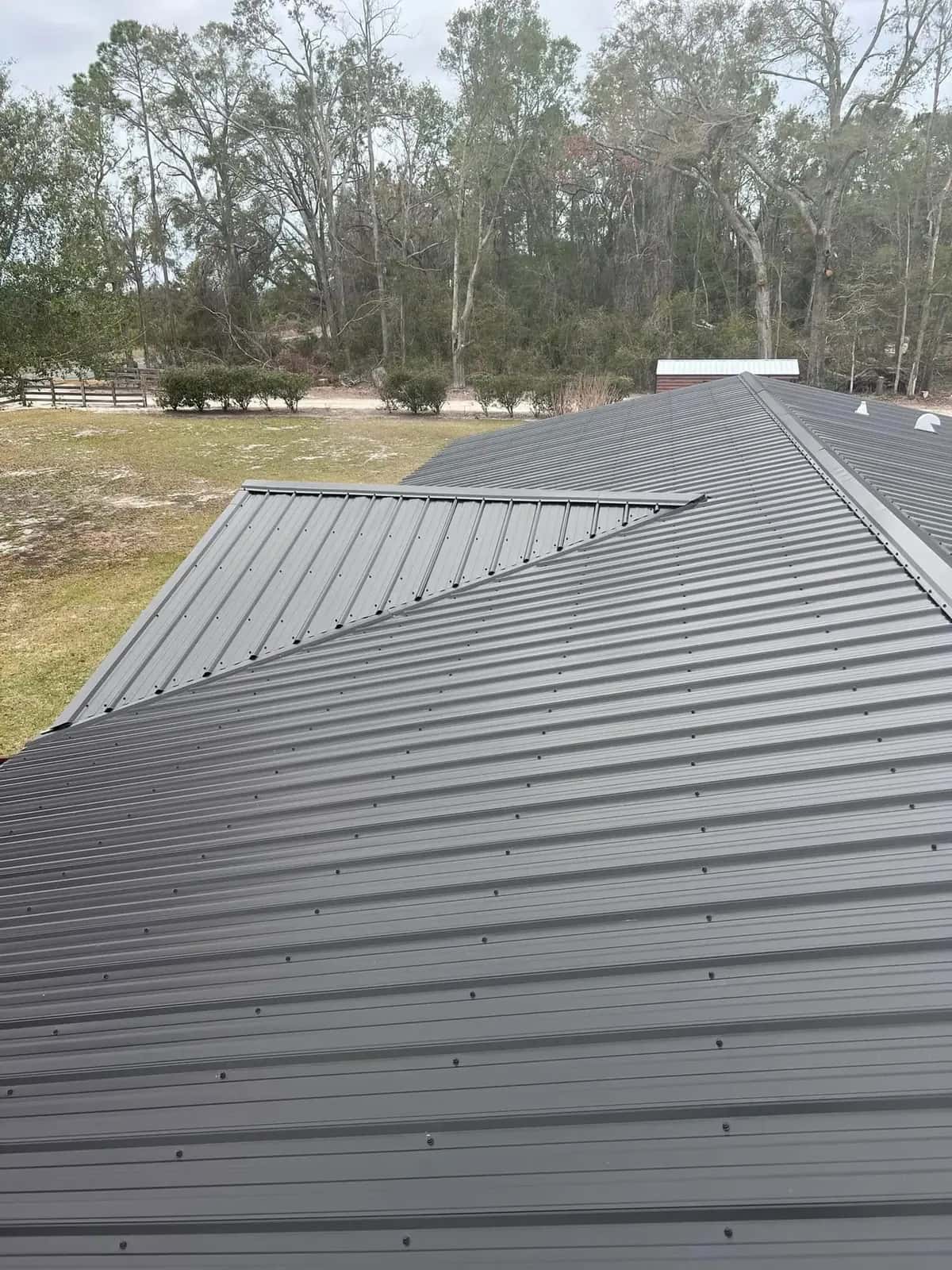 Powell & Sons archive
Roof repair decision guide
The useful question is not whether one option is always better. It is whether the observed condition can be isolated and integrated with the surrounding roof system.
A contained defect, compatible surrounding material, and a scope that can be tied to accessible evidence may support a targeted repair discussion.
Repeated trouble in different areas, widespread material concerns, multiple failing transitions, or uncertain layers beneath the surface may call for a whole-system evaluation.
Read the roof replacement guideConcealed decking, underlayment, and transition details can change the scope once they are accessible. The written plan should distinguish observed conditions from items that remain unknown.
Roof material guides
Repair details change with the roof system. Use these material guides to understand the surrounding assembly before requesting a property-specific assessment.
Review architectural shingle assemblies, including deck preparation, water protection, flashing, ventilation, starter, and ridge details.
Compare standing-seam and exposed-fastener metal systems, with attention to panel layout, attachment, flashing, and penetrations.
Learn how structure, underlayment, attachment, flashing, and ridge details work together beneath clay or concrete tile.
Explore repair, maintenance, and replacement planning for suitable flat, low-slope, and commercial metal roof systems.
Roof repair scope
The relevant checks depend on the roof and the reported symptom. These are common parts of a property-specific review, not a claim that every roof needs every action.
Reported interior locations, weather patterns, safe photographs, and accessible attic evidence help frame where the exterior review should begin.
Walls, chimneys, vents, pipes, curbs, and other transitions are reviewed for visible openings, movement, incompatible materials, or failed details.
Shingles, panels, tiles, membranes, fasteners, seams, and prior work are considered according to the roof system present.
Water-shedding paths, low points, roof edges, gutters where present, and debris patterns can reveal conditions that contribute to recurring trouble.
Where access and scope allow, decking, underlayment, attachment points, and interior surfaces can add context that the roof covering alone cannot provide.
The plan considers whether replacement materials and details can connect reliably to the existing assembly and where the repair boundary should stop.
Roof repair process
Every property is different. The process keeps observations, unknown conditions, and proposed work distinct so the owner can understand the next practical step.
Describe where trouble appears, what has changed, any earlier work, the visible roof material, and safe ground-level photographs when available.
The assessment connects interior clues with exterior surfaces, transitions, penetrations, drainage, and earlier repair areas that can be observed safely.
Visible evidence is compared across the assembly while acknowledging where water movement or concealed layers leave uncertainty.
The proposed scope identifies affected materials, tie-in points, accessible unknowns, and any condition that could require the plan to be revisited.
Work is checked against the defined scope, the area is cleaned, and relevant observations or follow-up considerations are reviewed with the owner.
Clear limitations
Good planning is explicit about uncertainty. Website content and photographs can prepare the conversation, but they cannot replace access to the property and roof assembly.
The visible interior symptom may be separated from the exterior entry point by framing, decking, or another water path.
Decking, underlayment, and earlier work may not be fully understood until the agreed scope makes those areas accessible.
A focused scope addresses the conditions it identifies; it should not be presented as proof that unrelated roof areas have no defects.
Structural, electrical, indoor-air, or other conditions outside roofing work may require evaluation by an appropriately qualified professional.
Official Florida resources
These first-party links support property-owner research. They are not legal advice and do not determine the requirements for a specific parcel or proposed scope. Links reviewed .
Roof repair FAQ
Straight answers about assessment scope, leak tracing, repair boundaries, materials, and Florida product information.
The review starts with the reported symptom and roof history, then considers accessible roof surfaces, flashings, penetrations, transitions, drainage, previous work, and interior or attic clues where available. The exact review depends on the property and safe access.
Water can move along decking, framing, fasteners, underlayment, or roof transitions before becoming visible indoors. The stain helps locate the symptom, while exterior and accessible interior evidence help narrow the likely entry path.
Yes. Walls, chimneys, vents, pipes, curbs, and other transitions can be included when the assessment ties them to the observed condition and the proposed detail is compatible with the surrounding roof assembly.
A replacement evaluation may deserve consideration when concerns appear across multiple areas, materials or transitions are broadly compromised, earlier repairs have not isolated the trouble, or concealed assembly conditions make a dependable repair boundary unclear.
Share the property ZIP code, building type, visible roof material, the symptom location, prior repair information, changes you have noticed, access constraints, and safe ground-level photographs. Do not climb onto the roof to gather information.
The applicable requirements depend on the property, jurisdiction, roof system, and proposed scope. The Florida Building Commission and product approval resources linked on this page support research, while the authority for the property confirms current project requirements.
Need help tracing roof trouble?